Share on Facebook
 Share on X
 Share by Email
 Share on Google Classroom
Sex work (referred to in legal terms as prostitution) is the exchange of sexual services for money or other needs, such as food or shelter. Sex work itself has never been a crime in Canada. But communicating and other activities relating to the exchange have been prohibited. Street-based sex work is the most visible form and receives the most attention. But it represents only a small proportion of the sex industry, which also includes brothels, escort services and strip clubs. There is an ongoing political and social debate about how and whether to decriminalize parts of the trade.
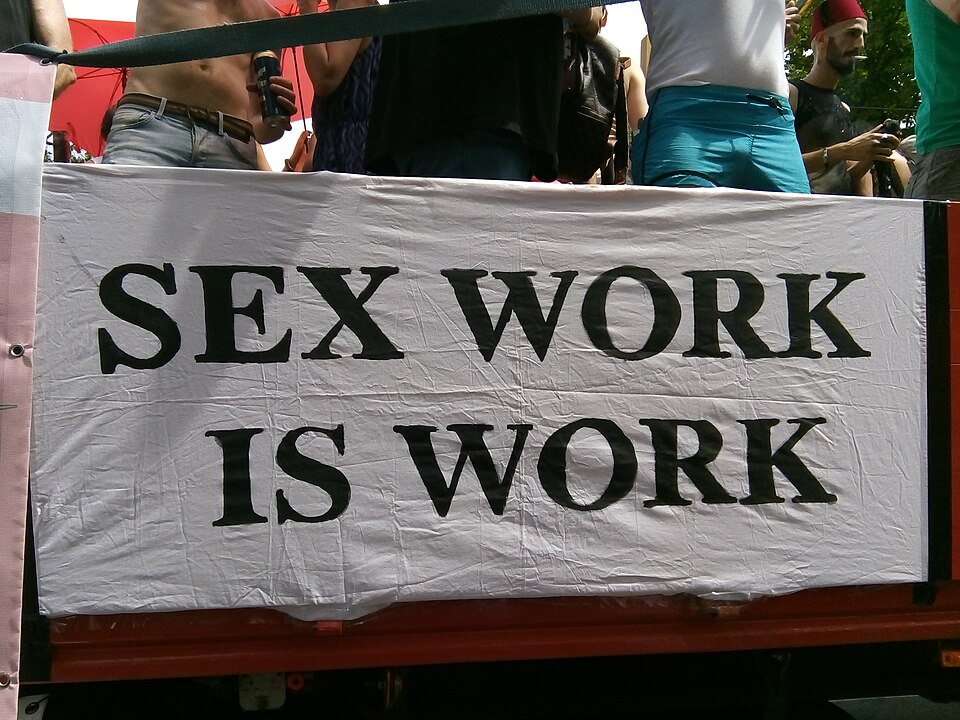
Terminology
Sex work and sex worker are seen as non-pejorative terms that emphasize the labour involved in exchanging sexual services for money or for other needs. Sex worker is currently more acceptable than the outdated term prostitution. However, prostitution remains in use in the Criminal Code of Canada and in case law. It tends to appear in legal writing that reflects statutory and judicial language. This article uses the terms sex work and sex worker, except when discussing prostitution as a legal category.
Background History
Sex work is not new in Canada's history. Throughout the 1800s, sex work was organized primarily around brothels. These houses were grouped together, often sharing their neighbourhood with taverns in the poorer parts of cities. In Ottawa and Quebec City, the brothel districts were in the “lower towns.” In Saint John, Halifax and Kingston, they were near the docks. Montreal and Toronto also had districts. The brothels in Saint John and Halifax provided gambling in addition to sex and alcohol. Because of this, they were some of the most financially successful houses in the first half of the 19th century.
With the development of railways, there was a mass migration westward at the turn of the century. Unlike the early farm families who settled the West, these migrants were mostly single men. They were typically either bachelors or husbands who had temporarily left their wives and children at home. This multitude of men created an environment in which sex work flourished. Brothels were located close to railway stations. Unless they came to the attention of social or moral reformers, little was done to close them. The authorities were inclined to feel that sex work had to be tolerated since it could not be eradicated. When the North-West Mounted Police did take action, it was usually for reasons unrelated to prostitution laws. These included complaints about the damaging effect on the population or on the railway construction projects, or evidence that those associated with the brothels were involved in other criminal activities.

Since the 1890s, legal repression has made it more difficult to operate brothels. As a result, street-based sex work became more common. Levels of sex work increased during the First World War, when there was little employment for women. It decreased during the Second World War, perhaps due to the greater economic opportunities for women in war-related industries. Immediately following the war, the level of sex work continued to fall.
Sex work itself has never been a crime in Canada. But various activities relating to the exchange have been outlawed. These include: 1) procuring or living on the avails of prostitution; 2) owning, operating or occupying a bawdy house; 3) all forms of public communication for the purpose of prostitution; 4) knowingly transporting another to a bawdy house; and 5) purchasing sexual services from someone under the age of 18. Statutes prohibiting some of these activities have been in place in Canada for more than 250 years.
Pre-Confederation Era
Legislation curtailing sex work prior to 1867 took the form of vagrancy laws. These were designed to remove indigents and other undesirables from the streets. The earliest prohibitions made the status of being a sex worker an offense. Disruptive or annoying behaviour was not a prerequisite to detention. Once the status was established, conviction would follow automatically. Both sex workers and those who ran or frequented common bawdy houses were dubbed vagrants. As such, they were liable to prosecution under the law.
From all accounts, enforcement during this period was sporadic and unpredictable. Sex work was likely to be tolerated in port cities, such as Halifax, and on the western frontier. But it was repressed when it was seen as a direct threat to respectable members of the population. Regardless of where and when the laws were enforced, the focus of attention during this early period was the prosecution of women who were sex workers.

Victorian Era
After Confederation, more complex provisions designed to protect women and children from procurers, pimps and brothel keepers were introduced. In 1867, the new federal government enacted laws prohibiting the defilement of women under the age of 21. In 1869, the existing vagrancy provisions were expanded to embrace men found to be living off the sex work of others.
The Criminal Code of Canada was finalized in 1892. In it, the vagrancy provisions outlawing street walking and bawdy houses were incorporated along with offenses directed at bawdy-house operators and procurers of women “for unlawful carnal connection.” Provision was also made for securing a search warrant when there was reason to suspect women or girls were being concealed or lured into sex work.
Over the next 28 years, the laws relating to procuring and living off sex work were further refined. Some argue these changes came through the work of the national temperance movement and Protestant church organizations. The reformers’ goals were to abolish the “social evil” by punishing exploiters and rescuing women and children from sexual exploitation.
Unfortunately, the aim of punishing exploiters while rescuing women and children did not carry over into practice. After 1895, more convictions were registered against women than men. Conviction rates for bawdy house offenses increased as well. But once again, the convictions of women significantly outnumbered those of men.
The social purity movement waned in the 1920s. The sex trade continued with little public comment for the next 50 years.

Rise of Sex Work Advocacy
Public debate around sex work was rekindled in the late 1970s and early 1980s. It was prompted by growing concern about the increased visibility of street-based sex work in residential neighbourhoods. The protests during this period recaptured the social nuisance concerns of the pre-Confederation era. The solutions most groups advocated were simply aimed at strengthening the soliciting section of the Criminal Code. In contrast, civil libertarians, a variety of feminist groups, and sex worker rights organizations supported much broader legal and social reform. In large part, their concerns echoed those of the Victorian reformers. They called for the criminalization of those seen as exploiting or coercing sex workers. They also wanted a full array of social reforms to eradicate the objective conditions that force people into sex work. In addition, they wanted the law changed so women and men could work in the sex industry without being the subject of a criminal offence.
In 1983, the Special Committee on Pornography and Prostitution was appointed by the federal government to report on these problems. It recommended strong criminal sanctions against street sex work but otherwise embraced the need for broad social and legal reforms. These included the decriminalization of bawdy houses for up to four persons. Only the former was adopted by the Conservative government of the day.
The prostitution legislation enacted during this period changed the wording of the Criminal Code in four areas. First, street prostitution ceased to be a status offence. The vagrancy provision was repealed and replaced by a communicating offense in 1985. Second, the liability for engaging in prostitution was extended to men, both as sex workers and as purchasers. Third, the protection of women under the procuring offence was extended to both men and women. Also, persons of either sex could be charged with procuring and living on the avails of prostitution. Fourth, customers of juvenile sex workers, and pimps who engage youths, were singled out for more severe sentences in 1988.
Enforcing the new communicating section did not suppress the public debate. It generated criticism from lawyers, sex workers, civil rights groups and feminists. It was challenged in several provinces on numerous grounds, including its legality under the freedom of expression section of the Canadian Charter of Rights and Freedoms. In 1990, the Supreme Court of Canada ruled (in R. v. Skinner) that the communication law violates the constitutional right to freedom of expression. However, it refused to strike the law down because it found such a violation to be justified.
This period also heralded the rise of strong sex trade advocacy groups. The Canadian Organization for the Rights of Prostitutes (CORP) began in Toronto in 1983. The Alliance for the Safety of Prostitutes (ASP) was founded in Vancouver in the early 1980s. Even so, contemporary enforcement practices continued to penalize women more often, and more severely, than men. Levels of street-based sex work initially plummeted and then quickly rebounded to previous and even higher levels. So, questions about the effectiveness of the communicating legislation remained.

Participants
Most sex work studies focus on women who work the street. They tend to ignore men who do sex work, men who purchase services, pimps, and the off-street sex industry. Yet field studies show that women represent only a small proportion of the people involved. Estimates based on the ratio of female to male sex workers and the average number of clients served each week indicate that less than five per cent of those involved in communicating for the purpose of sex work are women.
Police and courtroom statistics, as well as clinical and social agency samples suggest that most street-based sex workers are young, single, female, addicted, undereducated, from backgrounds with a history of poverty and abuse, and controlled by pimps. These impressions are only partially backed up by the field studies conducted for the 1983 federal committee on pornography and prostitution. Most are young (the average age varies from 22 to 25) and began sex work between the ages of 16 and 20. Most are single, but 30 to 70 per cent of the women have children and are supporting them financially.
Findings from field studies indicate that many women work for themselves: 62 per cent in Vancouver, 50 per cent in Toronto, and 69 per cent in Montreal claimed that they worked for themselves. The presence and influence of pimps was more extensive in the Maritimes and on the Prairies.
There is general agreement that sex work is a hazardous business. Those involved in the selling are at risk from physical assault, sexual assault, theft and sexually transmitted diseases. There is little consensus, however, as to why they are at risk. Some argue it is inherent in the job itself. Others insist the danger is inherent in its illegality.
Research on child and adolescent sex work is limited. But public concern over the number of youths involved in sex work is growing. Unofficial estimates suggest that a significant number of sex workers who work the streets and other public places are juveniles. Police statistics indicate otherwise: fewer than five per cent of those charged with prostitution activities are youth, and of those more than 80 per cent are young women. The lack of information on customers, pimps and the industry itself underscores the need for more studies on these topics.
Contemporary Era
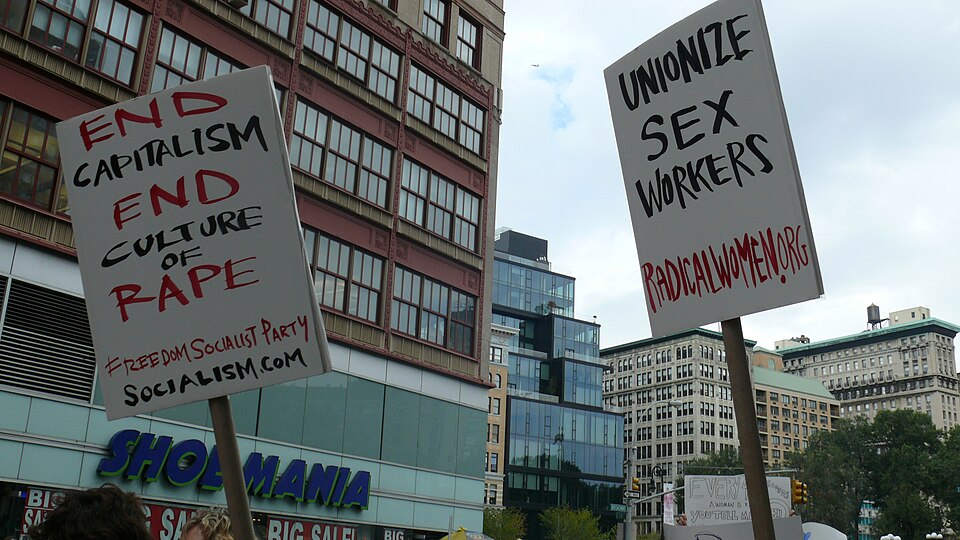
Since the 1990s, the public debate over sex work has continued. But the concerns and initiatives have changed in tone. Sex worker advocacy groups have taken on a myriad of issues: quelling fears related to HIV/AIDS; developing a charter of rights for sex workers; supporting the migration of sex workers; educating their communities about sex work-related issues; and launching programs for decriminalizing sex work and making it safer.
Various levels of government also began revisiting the issue. The procuring and living on the avails sections of the Criminal Code were amended in 1997 to discourage the exploitation of youth and trafficking for the purposes of prostitution. The Federation of Canadian Municipalities also met to discuss a similar set of issues. Several municipalities set up licensing for escorts and dancers (with all its attendant problems). Others began using municipal bylaws, such as loitering and jaywalking, to curtail street-based sex workers.
Despite these initiatives, or perhaps because of them, violence against sex workers increased dramatically in the 1990s, especially against street-based workers. This went on for several years until media attention on the large number of women from Vancouver’s Downtown Eastside who were reported missing or murdered spawned initiatives to more adequately assess the situation. (See also Robert Pickton Case.)
Key among these initiatives was the sub-committee struck in February 2003 by the federal Standing Committee on Justice and Human Rights. This sub-committee reviewed the solicitation laws to improve the safety of sex workers and communities overall. It also recommended changes to reduce the exploitation of and violence against sex workers. In another initiative, Pivot (a Vancouver advocacy group for marginalized populations) released a report charging that the harms experienced by sex workers make the laws surrounding the criminalization of sex work unconstitutional. The report recommended the repeal of these laws to improve the safety of sex workers.
Charter Challenges
In the early 2010s, two parallel cases emerged in the courts. Each challenged the constitutionality of Canada's prostitution laws under the Charter of Rights and Freedoms. The British Columbia challenge, spearheaded by a group called Downtown Eastside Sex Workers United Against Violence Society, alleged that the Criminal Code infringed on the right of sex workers to equality, liberty, security and free expression. In 2012, the Supreme Court of Canada said the case could proceed to the trial stage in BC. This made the case procedurally significant because it allowed a community organization to bring a legal challenge on behalf of a vulnerable group. This set a major access-to-justice precedent, although it ultimately did not affect prostitution laws.
A second challenge out of Ontario (Bedford v. Canada) alleged that the Criminal Code prevented sex workers from operating in a safe and secure environment. In a landmark ruling in 2010, the Ontario Superior Court ruled that laws against keeping a common bawdy house, living on the avails of prostitution, and communicating for the purpose of prostitution (solicitation) violate individual Charter rights to freedom of expression and security of the person. Therefore, the laws cannot be saved by the reasonable limits clause of the Charter.
In the same case, the Ontario Court of Appeal later agreed that anti-prostitution laws endanger sex workers. The appeal court said sex workers would be safer if they had the legal right to operate brothels and hire security staff for protection. But the court also said the existing law prohibiting solicitation should remain in effect.
The case was appealed to the Supreme Court, which delivered its judgment in December 2013. The Court struck down all three Criminal Code provisions at issue in the Ontario case. In a unanimous decision, written by Supreme Court chief justice Beverley McLachlin, the Court affirmed that the practice of trading sex for money is not illegal in Canada. It also said the provisions posed risks to the “health, safety and lives of prostitutes.”
Specifically, the court said the prohibition against living on the avails of prostitution, although designed to target the exploitive actions of pimps, instead punishes the “legitimate drivers, managers, or bodyguards” hired by sex workers to keep them safe. The court also said the law against solicitation, while it serves a useful purpose in dealing with the public nuisance factor of street sex work, creates risks for sex workers by making it difficult for them to screen potential customers for drunkenness or violence.
The landmark decision was hailed as a victory by certain sex trade workers. But it was criticized as harmful to women and society by some religious organizations and by the Elizabeth Fry Society, which assists women in the justice system. The Supreme Court ruled that the three Criminal Code provisions would remain valid for one year. During that time, Parliament could choose to introduce new laws on prostitution.
Bill C-36 (2014)
In June 2014, the federal government introduced Bill C-36. The bill, titled The Protection of Communities and Exploited Persons Act, was passed and became law in November 2014. Trading sex for money or other needs remains legal under the new legislation. But the Act makes illegal various sex work-related activities that would have been decriminalized had Parliament not responded to the Supreme Court's decision.
For the first time in Canadian law, the Act criminalizes the buying of sexual services in an attempt to reduce the demand for sex work. Also, for the first time in Canadian law, the Act criminalizes promotion or advertising for the sale of sexual services. Unlike the old crime of solicitation, the new law prohibits communicating anywhere in public for the buying of sex. It only prohibits the selling of sex in certain public places, such as near school grounds or playgrounds.
The Act also makes it a crime to receive a financial benefit — what the law now calls a “material benefit” — from the prostitution of others. This offence covers not only pimps who actively recruit people into sex work, but also, for example, employees at strip clubs who do not incite sex work directly, but who know that sex work takes place there and benefit financially from it.
In addition, the Act immunizes from prosecution anyone who sells their own sexual services and advertises or gains a benefit from the sale of their own services, either independently or in a co-operative setting such as a brothel.
The Protection of Communities and Exploited Persons Act remains the governing federal framework for sex work in this country. But it is controversial, and its legitimacy has been questioned by numerous groups. Its constitutionality has been tested in court.
Advocacy groups argue that the Act endangers sex workers and further marginalizes already vulnerable members of society. Concerns about sex worker safety became acute during the COVID-19 pandemic. During this time, sex workers were unable to access emergency benefits in part because, some advocacy groups said, the Act criminalized the sex trade. As a result, sex workers, many of whom already lived in poverty, struggled to find food and housing. Their lives were made more precarious.
In 2022, the House of Commons Standing Committee on Justice and Human Rights produced the report Preventing Harm in the Canadian Sex Industry. It also determined the Act was harmful to sex workers. The report was the result of a five-year review mandated by section 45 of the Act. Notably, the report recommended that the government acknowledge that “the Act causes serious harm to those engaged in sex work by making the work more dangerous.” The report called for significant changes to the law, including the repeal of sections 213 and 286.4 of the Criminal Code. As of December 2025, the federal government had yet to implement the recommended changes.
2021 Charter Challenge
Despite the alleged flaws of The Protection of Communities and Exploited Persons Act, legal challenges to its legitimacy have so far been unsuccessful. In 2021, the Canadian Alliance for Sex Work Law Reform (CASWLR) — a coalition of sex worker rights groups from across the country — initiated a Charter challenge against Canada’s current sex work laws. The group argued that the laws violated the rights of sex workers and made the sex trade more dangerous. The Ontario Superior Court of Justice dismissed the challenge in 2023, stating that the Act was Charter compliant. CASWLR then appealed the ruling.
In July 2025, the Supreme Court of Canada unanimously rejected a constitutional challenge to the Act in R. v. Kloubakov. The case sought to overturn the “material benefit” (section 286.2) and “procuring” offences (section 286.3) of the Criminal Code that criminalize third-part actors in sex work, like pimps. The Court concluded that the Act does not violate Charter rights and affirmed its constitutionality.
(See also Canadian Charter of Rights and Freedoms.)